Beyond a Will: How Adults in Their 30s & 40s Protect Family
A will says who gets what, but not where anything is. Here is how adults in their 30s and 40s pair a will with practical tools to protect their family.
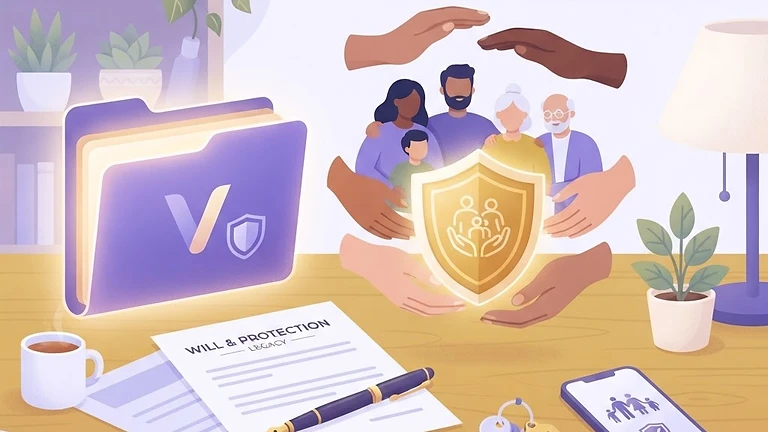
Most adults in their 30s and 40s know they should have a will. Fewer realize that even a well-written will leaves a major gap: it says who should receive what you own, but it does not tell your family where anything is, how to access your accounts, or what to do in the first 48 hours if something happens to you.
That gap is why more people in their 30s and 40s are pairing traditional estate documents with practical, everyday tools that protect their partner, children, or aging parents right now.
Why a will alone isn't enough in your 30s and 40s
In your 30s and 40s, most of your life lives online. Your bank statements arrive by email, your mortgage and insurance policies sit in web portals, your family photos live in the cloud, and your recurring bills run on autopay.
A traditional will goes through probate, which can take months, and it never includes:
- A list of your bank, retirement, insurance, and investment accounts
- Logins or recovery instructions for email, phone, and cloud photo libraries
- Practical instructions for your household, childcare, or pets
- Personal messages or videos for the people you love
As one respondent in our survey of 50 US adults aged 25 to 55 put it:
“Yes, I think the idea addresses a real and growing concern, especially as more of our lives move online.”
5 steps adults in their 30s and 40s take beyond a will
1. Keep beneficiary designations current
Life insurance, 401(k)s, IRAs, and payable-on-death bank accounts pass directly to the beneficiaries named on the account—even if your will says something different. Review them after every major milestone: marriage, a new baby, a home purchase, or a job change.
2. Name guardians and decision-makers
If you have kids under 18, a will is still essential to name their legal guardian. Pair it with a healthcare directive and durable power of attorney so someone you trust can step in if you are injured or incapacitated, not only after death. Read our guide on guardianship for your kids.
3. Put accounts and documents in one encrypted vault
Instead of leaving a partner or parent to hunt through locked phones, paper folders, and email inboxes, store your essential accounts, policy numbers, and documents in one private digital vault.
In our survey, another adult described how messy things get without a central place:
“I have this issue with my mother (elderly) and I write down all her passwords and info on my phone's notepad app, notepad on my PC, and i use to write them down physically. Due to the changing aspects of passwords and logins and important data it's difficult to keep up and /or keep private/secure or trust that things are totally secure sometimes.”
Use our digital estate plan checklist to organize your accounts in under ten minutes.
4. Set up controlled release with trusted contacts
Handing a master password to a relative today gives them full access immediately, with no safeguards. A modern digital estate vault lets you choose two or more trusted contacts, assign which categories each person can see, and release access only after missed check-ins, contact confirmations, and a 72-hour cancellation window.
“Add customizable access levels, for example, letting someone access only specific items after death or incapacitation, with time delays and approval workflows.”
5. Record the human details a legal document leaves out
Legal documents are written for courts. Your family also needs your voice: step-by-step instructions for what to call and cancel first, plus personal notes or video messages they can keep forever.
“Often secrets die with the person. It would be nice to have some info of your relative or friend after they're gone.”
Keep these documents safe and findable.
Afterly stores them encrypted, ready for the people who'll need them.
Will vs. digital estate vault: how they work together
- Your will handles legal authority: who inherits assets and who serves as guardian or executor.
- Your digital vault handles practical access: where accounts, policies, documents, and personal messages live so your family can actually carry out your wishes.
Not sure whether to start with a will or a vault? Read Trust & Will vs. Afterly: Which Comes First? or follow our 8-step guide to protecting your family.
You can create a free Afterly vault today with 2 GB of encrypted storage and up to 2 trusted contacts, or explore pricing for unlimited storage and estate-readiness tools. This article is general information, not legal advice.
Frequently asked questions
What do adults in their 30s and 40s need besides a will?
Beyond a will, most adults need up-to-date account beneficiaries, a healthcare directive and power of attorney, and a secure digital vault that lists their accounts, insurance policies, documents, and instructions so family members aren't locked out.
Is a digital vault a replacement for a will?
No. A will is a legal document that names guardians for children and directs how assets are distributed. A digital vault organizes the practical details—accounts, documents, logins, and personal messages—so your family can find and act on them.
What happens if you die in your 30s or 40s without a plan?
State law decides who inherits your assets and a court chooses a guardian for minor children. Meanwhile, loved ones often spend months trying to locate bank accounts, life insurance policies, and online logins.
How do I share account access with family without giving them my passwords now?
Use a vault with check-in and multi-contact confirmation, like Afterly. Your vault stays private and encrypted while you are active, and only releases designated categories to your trusted contacts after missed check-ins, confirmations, and a 72-hour safety window.
How long does it take to set up a digital estate vault?
Most people set up their core vault—adding their main financial accounts, insurance policies, and two trusted contacts—in about 10 to 15 minutes, then add documents and personal messages over time.
Ready to get organized?
Afterly keeps your important documents, accounts and messages in one secure vault, ready for the people who'll need them.
Start your vault free